An independent fact-finding mission created by the United Nations Human Rights Council published findings on 17 September 2026 that place the United States and the Iranian government inside the same document, each linked to a different category of grave crime. The mission said it had reasonable grounds to believe American forces committed war crimes in two strikes carried out on 28 February, and it said it had reasonable grounds to believe Iranian authorities committed crimes against humanity during the deadly suppression of anti-government protests, according to ABC News in Australia.
What the mission actually found
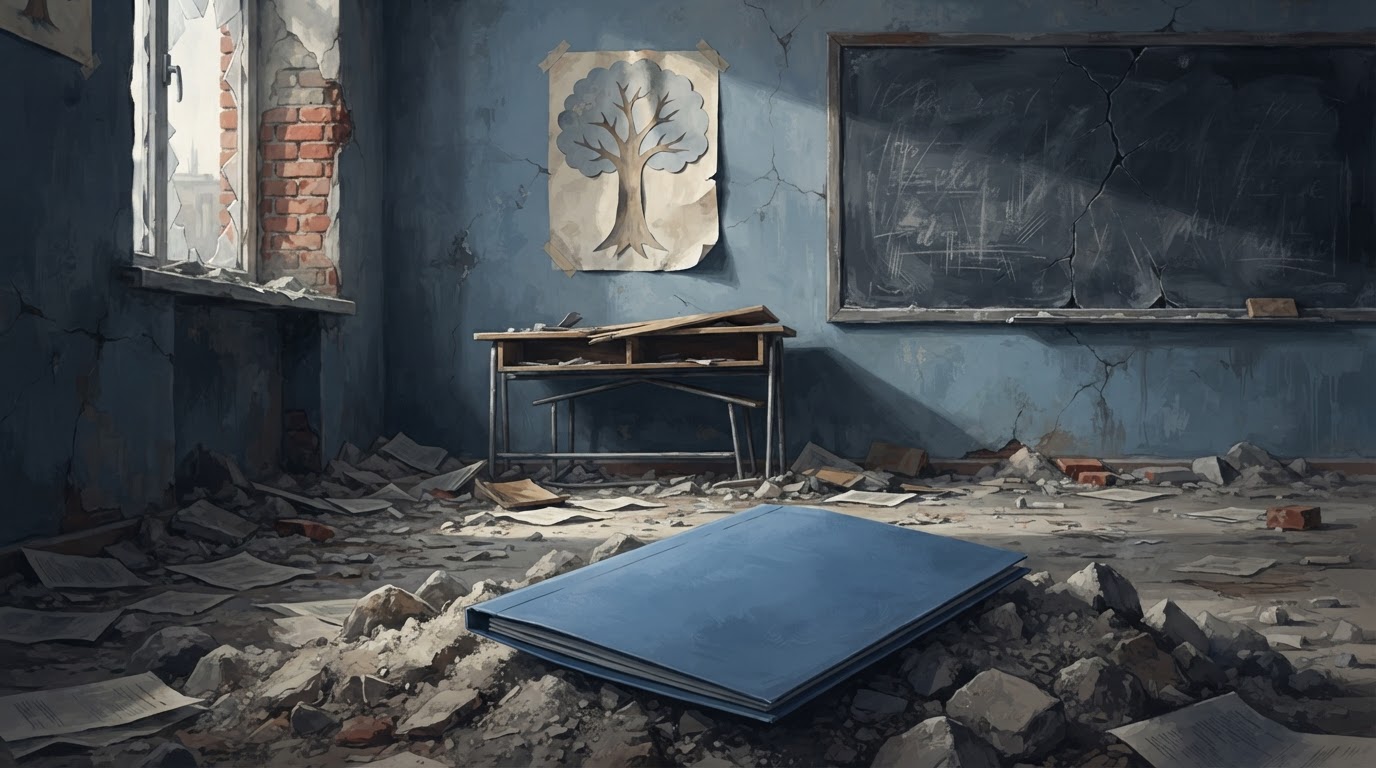
The experts said in their statement that, following the American and Israeli attacks of 28 February, they found reasonable grounds to believe the United States committed “the war crime of launching indiscriminate attacks resulting in the loss of life or injury to civilians or damage to civilian objects”, as reported by NBC News. That reporting describes two incidents. The first involved Tomahawk missiles striking what the mission called a clearly identifiable school in the southern city of Minab. The second involved precision munitions that dispersed tungsten pellets over what the mission called a clearly identifiable sports complex and residential area in Lamerd on the same day. NBC News reported that the findings centre on strikes that killed at least 178 civilians, including women and children.
The Guardian reported that the school in question was the Shajareh Tayyebeh primary school, and that Iranian authorities put the death toll there at more than 150 people, including roughly 120 schoolchildren, in its account of the same findings. Readers should notice that the two casualty figures in circulation come from different places, since one is the mission’s own count across two strikes and the other is a figure supplied by the Iranian state.
That distinction matters because the same report treats the Iranian state as an unreliable narrator of its own casualty numbers. ABC News reported that the mission could not independently verify the protest death toll, and that it believed the real number of dead and injured was likely far higher than official figures of 3,038 killed and 25,000 injured. The mission said killings by state security forces occurred on what it described as a staggering scale, and that the government’s conduct, including violence, internet shutdowns and the use of the death penalty, marked a significant escalation from earlier patterns of suppressing dissent. Tehran, for its part, blamed terrorists and rioters backed by exiled opponents and by the United States and Israel.
On the American side, ABC News reported that the Trump administration has yet to accept blame directly or to release the findings of a Pentagon investigation into the school bombing. CBS News carried the same core quotation from the mission without any published American rebuttal of the specific technical findings about munitions and target identification.
The gap between findings and consequences
The mission was created in 2022 by the Human Rights Council, the UN’s senior human rights body, and it is chaired by the Bangladeshi jurist Sara Hossain, as both ABC News and NBC News note. Bodies of this kind are routinely presented by the institutions that create them as instruments of accountability. The record described in this week’s findings sits awkwardly against that description. Four years after the mission began work, its subject government has continued the conduct being documented, the mission still cannot verify a death toll because it lacks access, and the report itself concludes that state violence escalated rather than receded.
The harder question concerns the other state now named. A fact-finding mission has no power to compel evidence from Washington, no power to subpoena a Pentagon review, and no route to a courtroom without a referral that a permanent member of the Security Council can block. An institution that produces findings it cannot enforce against Iran is unlikely to enforce them against the United States, and that limitation deserves to be stated plainly whenever the UN system is described as delivering accountability.
How the outlets framed it
The Guardian led with the school bombing and with the conclusion that there were grounds to believe American forces were behind the attack, treating the strike as the story and the mission as the authority confirming it. ABC News in Australia gave both halves of the report roughly equal billing in its summary box, pairing the war crimes finding against Washington with the crimes against humanity finding against Tehran. NBC News and CBS News chose a more distancing formula, describing the authors as human rights experts commissioned by the UN’s top rights body rather than as the UN itself. The difference reveals two editorial choices being made quietly: whether Iranian state conduct belongs in the headline alongside American conduct, and whether the institution owns the finding or merely hired the people who wrote it.
Both findings rest on the same evidentiary method, the same standard of reasonable grounds, and the same panel of experts. Anyone who accepts the mission’s authority on one government has accepted it on the other, and anyone who questions its method on one has questioned it on both. That symmetry is the most useful thing in the document, and it is the part most likely to disappear from the political argument that follows.