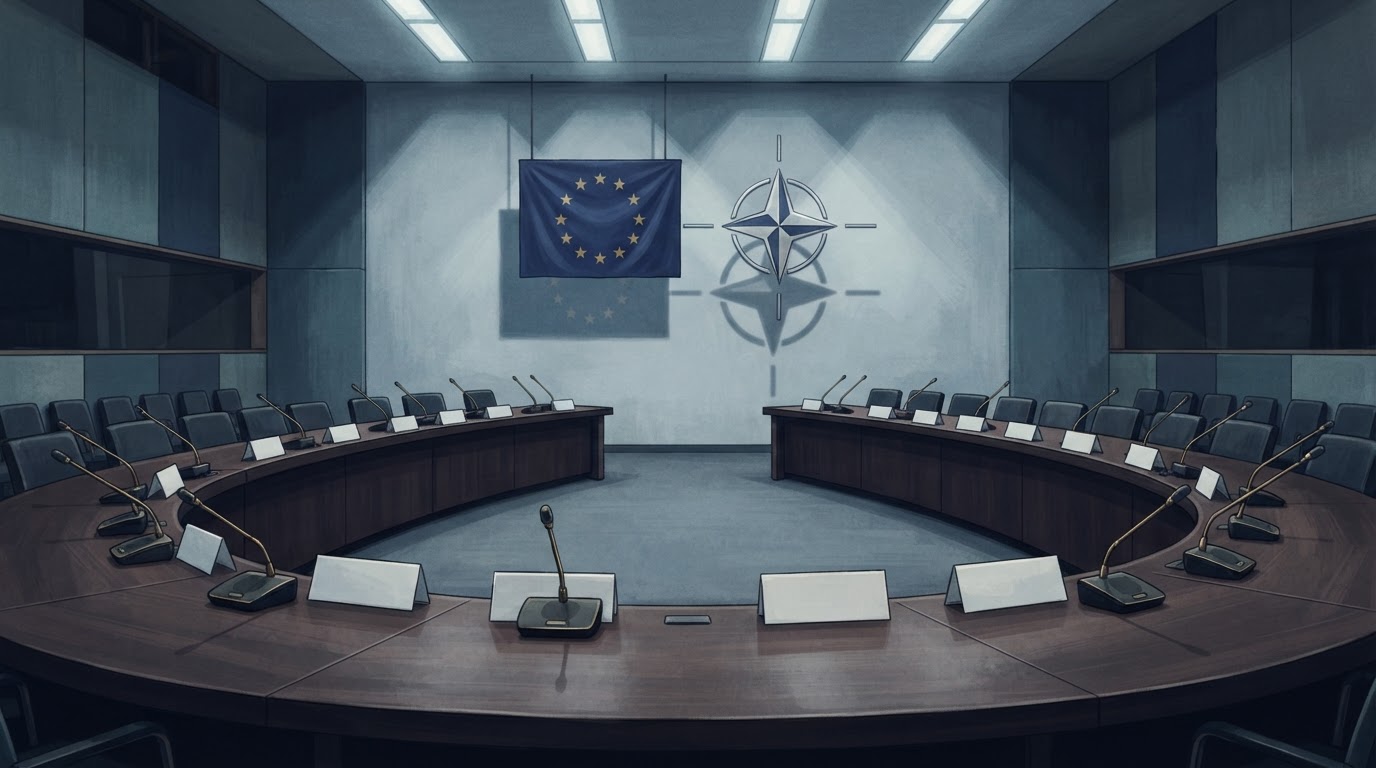
European Commission President Ursula von der Leyen used her annual State of the European Union address in Strasbourg on 16 September to propose two new security structures for the bloc. The first is a European Security Council, described by Euronews as a special configuration of the EU leaders’ summit that would sit alongside partners including Ukraine, the United Kingdom, Norway and Canada. The second is an Emergency Security Protocol, which she said would allow any single member state to convene all the others during a crisis, in her words “to coordinate a European response, to deter further escalation and to mitigate the impact” (euronews.com).
She was explicit about the model she had in mind. The Commission president told the Parliament that Europe needs “its own counter-hybrid playbook” and a mechanism “to flank NATO’s Article 4”, the clause that lets an alliance member call emergency consultations when it believes its territory or security is threatened (euronews.com). The Associated Press account of the speech, carried by The Hill, placed the proposal against a run of incidents that officials in Germany, Denmark and Poland have blamed on Russia, including drone incursions, arson and surveillance of defence facilities, and noted that Italian fighter jets operating under NATO command shot down a drone over Lithuania earlier in the week (thehill.com).
What the Strasbourg proposal actually contains
POLITICO reported that the pitch immediately reignited a long-running turf battle between Brussels and the alliance, and that the proposed consultation procedure is “almost identical” to NATO’s Article 4. The same report noted that von der Leyen insisted the EU would be “strengthening work with NATO”, while NATO itself has bristled at EU attempts to take on military-adjacent tasks and has repeatedly warned against “unnecessary duplication” (politico.eu). Officials briefing on the plan have tried to narrow its scope, telling Breaking Defense that the body would give strategic direction to Europe’s defence build-up in production and resilience terms while leaving military planning and operational command with existing structures (breakingdefense.com).
The membership arithmetic is where the resilience language becomes difficult. Three of the four outside partners named for the new council, Britain, Norway and Canada, are already NATO members, and the fourth, Ukraine, is not. A forum of EU states plus those three therefore reproduces much of NATO’s European and North Atlantic membership while leaving out the United States and Turkey. POLITICO reported that the proposal was pitched in response to escalating Russian attacks and fraying transatlantic relations, and framed it as a reaction to both Donald Trump and Vladimir Putin (politico.eu).
Reaction inside her own political family was blunt. POLITICO reported that members of the European People’s Party, the centre-right group that supplies von der Leyen her parliamentary base, publicly rejected the security council concept within hours, with one senior figure in the group dismissing it to the outlet as a “dead-born idea” (politico.eu). That criticism matters more than opposition from the flanks of the chamber, because the EPP is the bloc that would have to carry any treaty-adjacent security initiative through the Parliament.
Why the duplication question matters
The Commission’s own account of the Emergency Security Protocol rests on the existing EU treaty mutual assistance clause, which already obliges member states to aid a member facing armed aggression on its territory (euronews.com). If that obligation is already written down, the open question is what a parallel consultation mechanism adds beyond a second table at which twenty-seven governments must reach consensus during a fast-moving incident. Brussels presents the architecture as filling a gap below the threshold of armed attack. The alliance’s stated worry, as POLITICO described it, is that two overlapping consultation procedures produce delay and confusion at the moment when speed is the whole point (politico.eu).
The Canadian element drew the warmest coverage. Breaking Defense reported that von der Leyen addressed Prime Minister Mark Carney directly in the chamber, saying she would like to work with him on opening the door for Canada to become the first associate member of the EU, and noted that many questions remain about what such a status would mean in practice (breakingdefense.com).
How the outlets framed it
POLITICO treated the announcement primarily as an institutional conflict, reporting that the plan revived a turf war with NATO, unsettled officials in Brussels and was rejected by lawmakers in von der Leyen’s own parliamentary group. The BBC’s coverage of the same address led on the partnership offer to Canada and the welcome it received in Ottawa, and the Associated Press account carried by The Hill organised the story around Russian drones and sabotage. Euronews and Breaking Defense sat between the two, reproducing the Commission’s stated rationale while noting that the practical design remains undefined. The difference is that only one of these framings asks whether a second Article 4 procedure improves European security or simply adds a second meeting, and that question is the one conservative MEPs raised first (bbc.com.im).
The Commission has promised to set out detailed ideas for making the council a reality. Until those documents exist, the proposal is a political signal, and the first people to read it as a signal about NATO’s relevance were sitting on the benches von der Leyen depends on.