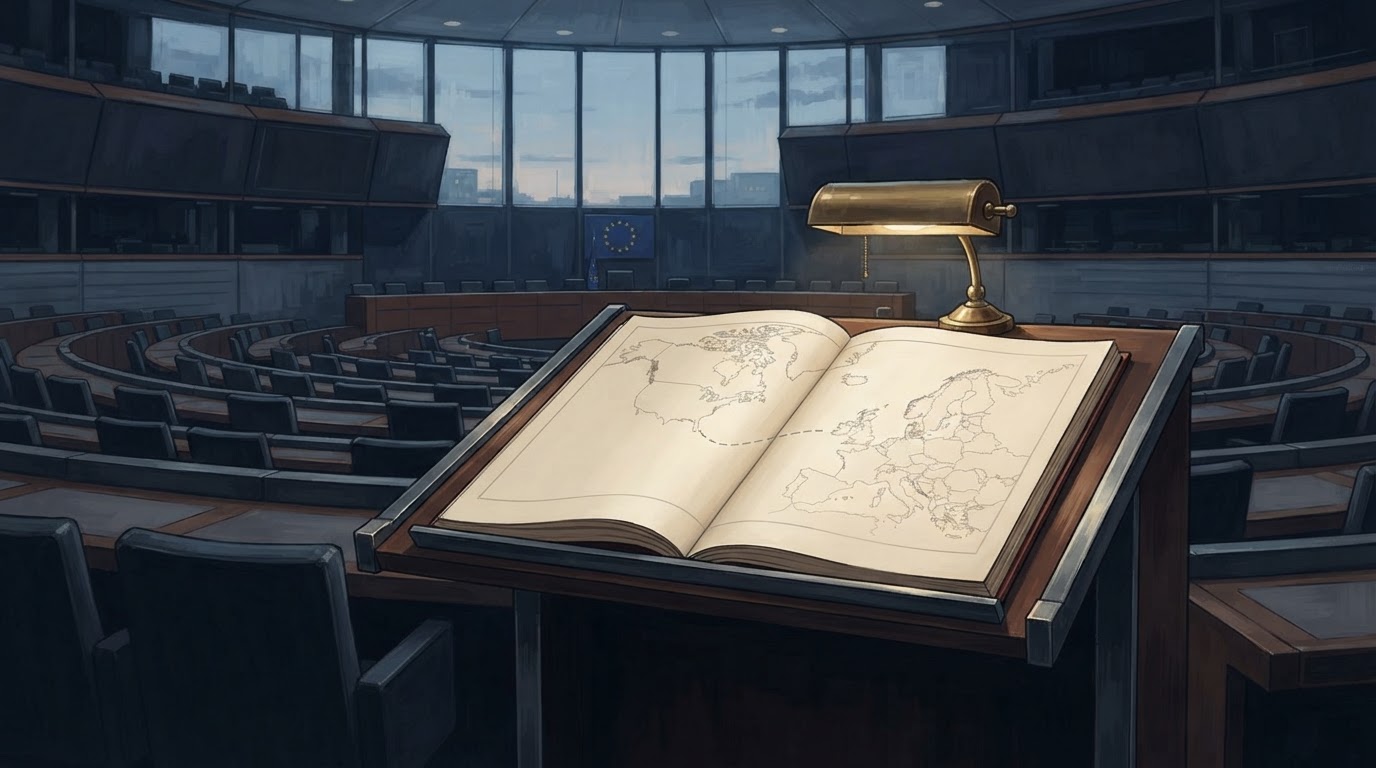
Canadian Prime Minister Mark Carney addressed the European Parliament in Strasbourg this week and welcomed a proposal from European Commission President Ursula von der Leyen to make Canada the bloc’s first associate member, a status that has no existing basis in EU treaties and would need to be invented from scratch, according to theguardian.com.
Carney told the chamber that Canada and Europe should pursue what he called deep cooperation across critical minerals, energy security, artificial intelligence, defence industrial capacity, space and payments, arguing the goal was to secure both sides’ strategic autonomy, according to theguardian.com. The Los Angeles Times reported that Carney separately told journalists after the speech that he was not seeking full EU membership, and that he described the goal instead as reducing exposure to economic and geopolitical pressure through deeper integration in trade, defence, minerals, AI, energy, space, research and financial services, according to latimes.com.
What associate status would actually require
One senior European politician quoted anonymously by the Guardian said there is no agreed legal definition of associate membership and that the term has generated more confusion than clarity among EU officials themselves, according to theguardian.com. Any new arrangement would still require approval from all 27 EU member states, and the Guardian noted that ten of them, including France, Italy and Poland, have yet to fully ratify the 2016 Comprehensive Economic and Trade Agreement that Carney himself cited as a model of success, a gap that raises doubts about how quickly a broader framework could take binding effect.
Von der Leyen unveiled the associate membership idea only days before Carney’s speech, and she has said Europe wants to build a closer relationship with Canada without offering a precise legal mechanism for doing so, according to latimes.com. Carney told the parliament that Canada was pursuing resilience rather than dominance and said the arrangement would not let any outside power control Canadian markets or impair its sovereignty, a formulation that leaves the practical division of regulatory authority over AI standards, energy permitting and critical minerals development still to be negotiated between officials in Ottawa and Brussels.
Donald Trump has already dismissed the entire proposal as laughable, a reaction the Guardian noted came before any details had been settled, underscoring how much of the Strasbourg moment was symbolic positioning rather than a finished agreement.
How the outlets framed it
The Guardian’s report on Carney’s speech itself emphasised the warmth of his reception, describing a chamber that interrupted him repeatedly with applause as he listed sectors for cooperation, while a companion Guardian piece published the same day struck a far more sceptical note, quoting an unnamed senior politician who said nobody is sure what associate membership even means and that the term has raised more questions than it has answered. The Los Angeles Times took a middle position, treating the offer as a serious diplomatic overture driven by Carney’s need to hedge against pressure from Washington, while noting his own careful disclaimer that he was not pursuing full EU membership. The gap between the celebratory framing of the speech itself and the uncertainty documented by EU officials in the companion piece reveals that the diplomatic theatre in Strasbourg ran well ahead of any legal or political agreement on what associate status would actually entail.
Carney has committed to bringing any final structure to a vote in the Canadian Parliament, according to reporting from Euronews, which also noted that the only comparable precedents, Norway, Iceland, Liechtenstein and Switzerland, have all had to apply large bodies of EU law in exchange for market access without gaining a direct vote on approving that law, a trade-off any Canadian version of associate status would likely have to confront.