The weekly jobless claims report released on 17 September 2026 looked, on its face, like good news. Initial claims fell to 196,000, the lowest reading since mid-July, and continuing claims dropped to their lowest level since early 2024, according to Labor Department data cited by ABC News. The wire report framed the decline as further evidence that layoffs remain rare and that most working Americans currently enjoy job security. Federal Reserve Chairman Kevin Warsh pointed to the same data the day after the Fed raised its benchmark rate to a range of 3.75 to 4 percent, telling reporters that the labour market’s low jobless rate and rising job openings were, in his words, “one basic sign of strength,” as reported by Reuters.
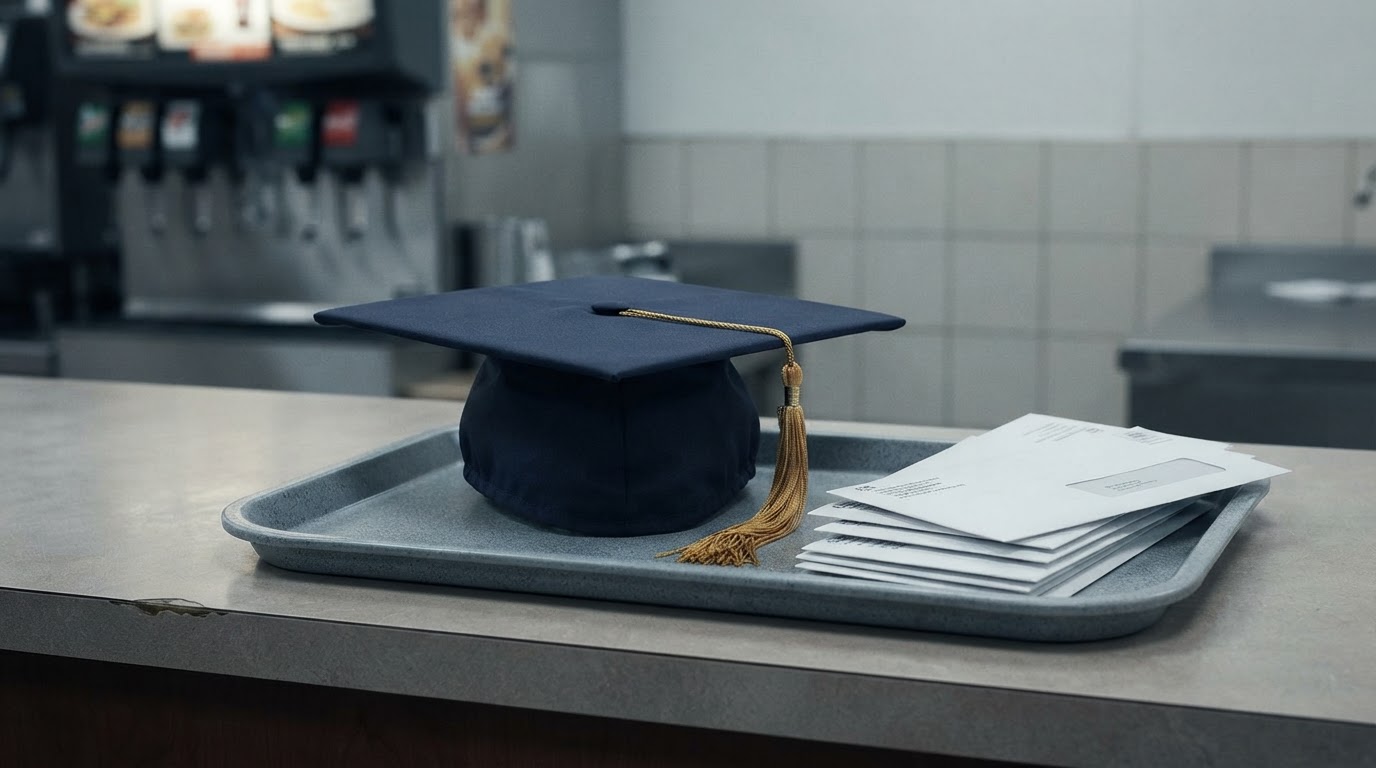
A separate piece of reporting published the same day complicates that picture considerably. Fortune’s review of matched employer-employee data collected by the Census Bureau found that graduates who studied computer science and other AI-exposed majors since 2022 have increasingly ended up working in retail and food service rather than the white-collar roles they trained for, according to Fortune’s analysis. The outlet reported a 12 percent drop in early-career hiring concentrated in industries most exposed to generative AI tools, alongside a 13 percent earnings hit for graduates of AI-exposed majors compared with graduates of majors the researchers classified as less exposed. Lee Tucker, an economist involved in reviewing the underlying figures, told Fortune that the pattern points to employers substituting entry-level software and support roles with AI tools rather than simply slowing hiring across the board.
Two different pictures of the same labour market
The jobless-claims series and the Census Bureau’s matched data are measuring different things, which is part of why they can point in opposite directions at once. Claims data track layoffs and benefit applications across the whole workforce, and by that measure the labour market looks calm; Reuters noted that continuing claims are running at levels last seen in May 2023, when unemployment stood at 3.6 percent. But the Census figures Fortune drew on track hiring flows for specific cohorts, in this case recent graduates entering industries where AI tools have spread fastest since 2022. A broader look at entry-level hiring trends, reported separately by Futurism, found similar softness in first-job hiring data pulled from other labour-market sources, suggesting the Census findings are not an isolated statistical quirk.
None of this shows up in the topline claims number because graduates who take a retail or food-service job instead of a vacant white-collar one are not filing for unemployment benefits. They are employed, just not in the field they trained for and often at lower pay. That is precisely the kind of underemployment that aggregate labour statistics are not built to detect, and it raises a fair question about how much weight officials should put on claims data alone when judging whether the AI transition is landing softly.
What the rate decision leaves out
Warsh’s comments, as relayed by Reuters, treated low jobless claims and rising job openings as confirmation that the labour side of the Fed’s mandate is in good shape. That framing is defensible on its own terms, since claims and openings are the standard inputs the Fed has always used. But the Census data Fortune reported suggests a more targeted disruption is under way beneath that aggregate calm, one concentrated in exactly the graduate cohort that studied the fields most associated with AI adoption. Whether that shows up in future claims data, or simply persists as a quiet underemployment problem among graduates who never file for benefits in the first place, remains an open question the rate decision does not answer.
How the outlets framed it
ABC News and Reuters both framed Thursday’s jobless-claims release as confirmation that the labour market is sturdy enough to support the Federal Reserve’s rate increase, citing Chairman Kevin Warsh’s description of low claims and rising job openings as a sign of strength. Fortune’s reporting on the Census Bureau’s matched employer-employee data tells a narrower and less reassuring story, showing a measurable drop in early-career hiring and earnings concentrated in AI-exposed majors and industries. The aggregate claims figures and the graduate-level Census data are not contradictory so much as they are answering different questions, and the gap between them shows how a calm topline number can coexist with a specific hiring collapse that never registers in the weekly claims count.
The Census figures do not settle whether AI adoption is the direct cause of the hiring drop Fortune reported, and the underlying working paper was not independently reviewed for this article. But the size of the gap between the graduate-level data and the reassuring tone of this week’s aggregate labour reports is large enough to warrant more scrutiny than the headline jobless-claims number has received.