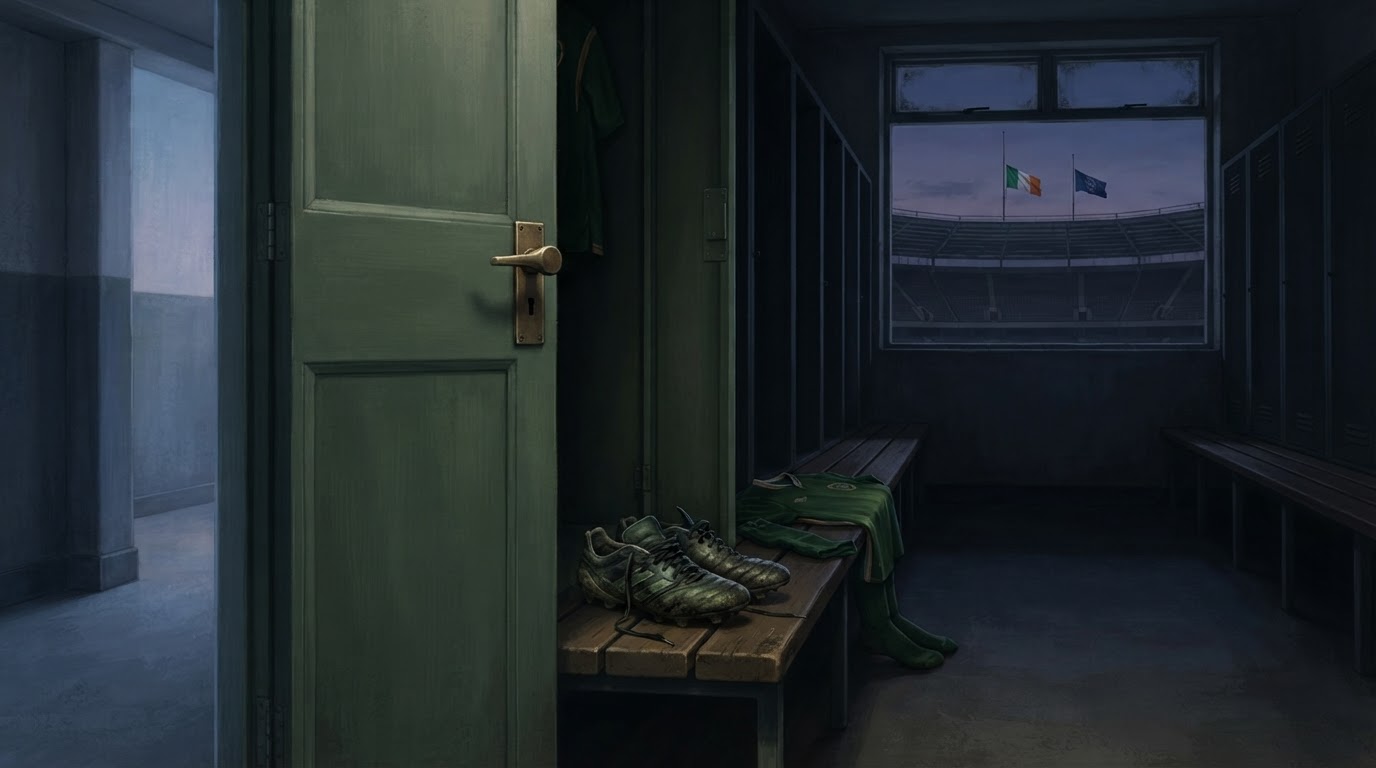
The Republic of Ireland’s Nations League fixture against Israel, scheduled for Sunday in Debrecen, Hungary, descended into confusion on Saturday morning after goalkeeper Gavin Bazunu told teammates he did not want to take part in the match, according to the Irish Times. Other players were reported to be weighing whether to join him, and a scheduled press conference was delayed by nearly two hours with no explanation given to UEFA’s match delegate or to journalists from Ireland and Israel who had already gathered at the stadium.
The Irish Times reported that the squad’s training session, originally set for 11am local time, was also pushed back as players remained locked in discussion with manager Heimir Hallgrímsson and FAI chief executive David Courell, according to live coverage from the same outlet. A promised statement affirming the squad’s position never materialised, which the paper attributed to a lack of unanimity among the players rather than any single decision from the top.
A federation that insists it is staying out of it
The Football Association of Ireland has maintained throughout the week that the fixture would go ahead as planned, even as it rerouted the match to a neutral venue in Hungary and scheduled next week’s return leg in Serbia rather than at home, a decision the Irish Times described as the FAI’s chosen method of managing a fixture against a country it associates with the war in Gaza without actually cancelling it, according to the Irish Times. That same report noted that sponsor branding will not be visible around the pitch during broadcast, a choice that reads as an attempt to keep the FAI’s commercial partners at arm’s length from the controversy while still fulfilling the match.
Hallgrímsson himself has already broken with the idea that a coach can stay neutral on the matter. He told reporters this week that his team is “playing against genocide,” not against Israel, a phrase that drew a formal rebuke from Israel’s football association, according to the Irish Examiner’s account of the build-up, which also reported that midfielder Jason Knight said outright that he does not think the fixtures should go ahead at all, per the Irish Examiner. Stand-in captain Dara O’Shea has taken a different tone, telling reporters earlier in the week that players needed to respect one another’s views and take time over the decision rather than rush to a collective position, a comment reported by the Examiner as evidence of a squad still working through internal disagreement rather than a unified protest.
The Examiner also reported that players had asked to meet urgently with Courell and had discussed possible gestures short of a full boycott, including refusing the pre-match handshake, wearing clothing with human rights messaging, and donating match fees, potentially totalling six figures alongside a contribution from the FAI, to charities working in conflict zones. The same report cautioned that such gestures from largely wealthy professional players would not necessarily shield the squad from accusations of tokenism.
How the outlets framed it
The Irish Times has largely framed this story around the players themselves, tracking Bazunu’s private objection, the squad’s internal meetings, and gestures such as donating match fees as expressions of personal conscience rather than institutional policy. The Irish Examiner leaned toward the governance angle, describing the FAI’s decision to relocate rather than cancel the fixture as the organisation’s chosen way of avoiding the harder question of whether it should be playing Israel at all, and detailing the specific protest measures players were weighing as a structured response to that institutional choice. The difference reveals two separate stories inside one fixture: one about individual players wrestling with their own consciences, and another about a federation trying to hold a neutral posture that its own coach has already publicly abandoned.
What neither outlet resolved by Saturday was whether UEFA intends to treat any of this as a governance matter of its own. FIFA has previously examined complaints regarding the Israeli football association’s operations in the occupied West Bank, yet no equivalent scrutiny from UEFA of Sunday’s fixture has been reported. That silence, set against a manager who says his side is playing against genocide and a goalkeeper unwilling to take the pitch, leaves the claim that football can remain apolitical looking increasingly difficult to sustain.